How Aluminum Foundry helps industries achieve higher results
Wiki Article
Understanding the Benefits of Aluminum Foundry for Ingenious Item Development
Aluminum Foundry plays a crucial duty in ingenious item growth. Its special buildings use significant advantages in different industries. The lightweight nature of Aluminum combined with its stamina enables the development of intricate layouts. In addition, the material's rust resistance adds to its longevity. As makers seek to enhance performance and sustainability, recognizing these advantages becomes necessary. What additional understandings can be revealed about the potential of Aluminum in forming modern products?The Lightweight Benefit of Aluminum
Although numerous metals are used in manufacturing, Aluminum sticks out as a result of its lightweight properties, which substantially add to performance in a variety of applications. This particular makes Aluminum especially appealing in markets such as automobile, aerospace, and construction, where weight reduction can result in enhanced performance and gas efficiency. Its reduced thickness enables simpler handling and transportation, minimizing logistical expenses and labor requirements.On top of that, the lightweight nature of Aluminum makes it possible for developers and engineers to create ingenious products that may not be practical with heavier metals. This convenience is type in markets concentrated on sustainability, where lessening product weight aligns with green methods. Aluminum's deterioration resistance adds to its charm, guaranteeing longevity without the requirement for too much supports. The light-weight advantage of Aluminum not only improves item style but additionally contributes to operational performance, making it a recommended selection in contemporary production.
Exceptional Strength-to-Weight Ratio
Aluminum's exceptional strength-to-weight ratio supplies significant architectural advantages in numerous applications. This characteristic not just improves toughness and durability but additionally permits for versatile layout choices. Consequently, markets increasingly favor Aluminum for jobs requiring both light-weight products and robust performance.Light-weight Architectural Benefits
When taking into consideration materials for architectural applications, the phenomenal strength-to-weight proportion of Aluminum provides significant advantages. This particular permits designers and engineers to create lightweight structures that maintain high levels of toughness and security. By making use of Aluminum, products can attain optimal efficiency without the burden of too much weight, which is specifically valuable in industries such as aerospace, automobile, and building and construction. The lowered weight adds to boosted gas efficiency in cars and reduces general production prices. Furthermore, light-weight Aluminum frameworks facilitate much easier handling and installment, streamlining production processes. The capability to develop intricate shapes and forms without jeopardizing structural integrity additionally improves the convenience of Aluminum in innovative applications. On the whole, the lightweight architectural benefits of Aluminum are vital for advancing modern-day engineering options.Enhanced Durability and Strength
While many products battle to balance stamina and weight, Aluminum master offering remarkable durability and durability as a result of its durable properties. This lightweight metal flaunts a remarkable strength-to-weight proportion, making it an optimal choice for applications requiring both efficiency and efficiency. Aluminum's resistance to deterioration better improves its resilience, enabling items to stand up to severe ecological conditions without deteriorating with time. Furthermore, the material's capability to absorb shock and stand up to deformation adds to its overall strength, ensuring that frameworks maintain integrity under stress and anxiety. As an outcome, Aluminum is significantly favored in sectors that demand both high efficiency and longevity, enhancing its status as a leading material for cutting-edge product advancement in various fields.Versatile Design Applications
The remarkable strength-to-weight proportion of Aluminum gives designers with unparalleled versatility in developing ingenious items across different sectors. This characteristic makes it possible for the development of light-weight structures that do not jeopardize on toughness, making Aluminum ideal for applications in aerospace, automotive, and customer goods. Developers can craft elaborate shapes and complicated geometries, boosting both performance and aesthetic charm. The capacity to minimize weight without giving up performance enables for boosted gas efficiency in cars and boosted haul capacity in aircraft (Aluminum Foundry). In addition, Aluminum's versatility facilitates rapid prototyping and manufacturing, streamlining the item development process. On the whole, this flexibility empowers engineers and designers to press borders, causing innovative remedies that fulfill the needs of modern-day marketsDeterioration Resistance and Resilience
Aluminum is renowned for its natural deterioration resistance, making it an excellent selection for numerous applications subjected to severe atmospheres. This fundamental building not only improves the longevity of Aluminum items but likewise contributes to their total sturdiness. Therefore, Aluminum keeps its stamina and performance over time, reducing the need for regular replacements.All-natural Rust Resistance
Although many steels are prone to rust, Aluminum attracts attention due to its all-natural resistance to environmental destruction. This special home stems from the development of a thin, safety oxide layer that establishes on its surface area when exposed to air. This oxide layer works as a barrier, preventing more oxidation and securing the underlying metal from moisture and other destructive representatives. Because of this, Aluminum is especially beneficial in numerous applications, including vehicle, aerospace, and construction sectors, where exposure to rough settings is usual. Additionally, the intrinsic corrosion resistance of Aluminum decreases the demand for protective finishes, therefore reducing upkeep costs and improving the longevity of items. Aluminum's natural deterioration resistance considerably contributes to its charm in innovative product growth.Long-lasting Material Toughness
Understood for its impressive corrosion resistance, Aluminum likewise displays remarkable material toughness that adds to its sturdiness in various applications. This combination makes Aluminum an excellent choice for markets varying from automotive to aerospace. Its lightweight nature does not jeopardize strength; instead, it commonly outperforms heavier metals in both durability and durability. The integral properties of Aluminum enable it to stand up to rough environmental problems, reducing the need for frequent replacements or fixings. Additionally, advanced Aluminum alloys even more enhance its toughness, making it suitable for high-stress applications. As a result, producers can depend on Aluminum components to preserve structural integrity over time, making certain that products stay effective and trusted throughout their life-span. This resilient product strength placements Aluminum as a vital gamer in ingenious item advancement.Design Adaptability and Visual Allure
When thinking about manufacturing alternatives, the style flexibility and aesthetic appeal of Aluminum castings stand out as significant benefits. Aluminum's unique buildings permit intricate styles that would be tough or impossible with various other products. Its light-weight nature allows manufacturers to produce intricate shapes while keeping structural honesty. This versatility promotes technology, as designers can experiment with different forms and functions, resulting in creative solutions customized to certain applications.In addition, Aluminum can be easily ended up with various surface therapies, including anodizing and powder layer, improving its aesthetic allure. These coatings not just improve aesthetics but additionally use added protection versus environmental elements. The capability to create both useful and visually striking components makes Aluminum an appealing selection for sectors varying from auto to durable goods. Inevitably, the mix of design versatility and aesthetic versatility settings Aluminum castings as a compelling choice for modern item growth.
Cost-Effectiveness in Manufacturing
The benefits of Aluminum spreadings prolong past their design adaptability and visual allure to incorporate substantial cost-effectiveness in manufacturing. Aluminum's light-weight nature lowers transport expenses, making it a cost-effective option for suppliers. The rapid production cycles connected with Aluminum casting processes, such as die spreading, add to shorter lead times and enhanced throughput, allowing firms to satisfy market demands a Aluminum Foundry lot more efficiently.Additionally, Aluminum's superb recyclability decreases product waste and the connected costs of resources. Making use of sophisticated casting strategies additionally improves precision, reducing the requirement for substantial post-processing and subsequent expenses.

Sustainability and Ecological Advantages
While numerous industries encounter boosting stress to take on sustainable techniques, Aluminum factories inherently offer significant environmental advantages. Making use of Aluminum, an extremely recyclable material, enables for reduced waste and reduced power consumption throughout the manufacturing procedure. Recycling Aluminum calls for only around 5% of the energy required to produce brand-new Aluminum from basic materials, therefore lessening greenhouse gas exhausts.Furthermore, Aluminum foundries often carry out sophisticated innovations and processes that enhance power effectiveness, further adding to their sustainability account. The light-weight nature of Aluminum also results in fuel savings in transportation and logistics, which is essential in various applications, consisting of vehicle and aerospace industries.
Moreover, by using lasting sourcing techniques for basic materials and taking part in responsible waste administration methods, Aluminum factories can substantially minimize their environmental impact. On the whole, the environmental benefits of Aluminum foundries make them a vital gamer in advertising sustainability within manufacturing.
Streamlined Production Processes
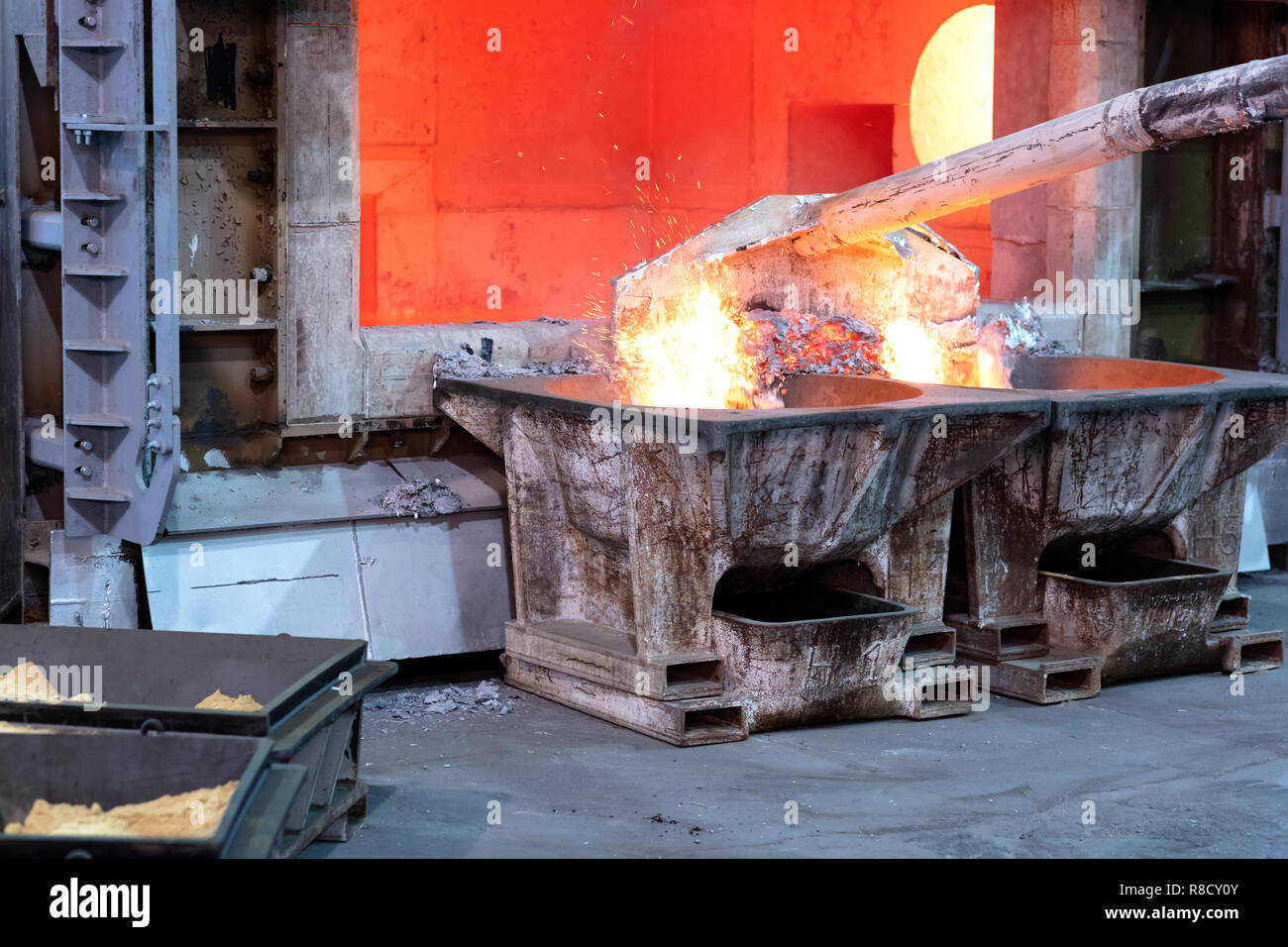
Furthermore, Aluminum shops commonly carry out lean production principles, which concentrate on minimizing non-value-added activities. This approach results in enhanced workflow, far better inventory administration, and timely shipment of products.
Collaboration amongst teams is also a hallmark of structured processes in Aluminum shops, allowing quicker problem-solving and development. By fostering a society of continuous improvement, these facilities can adjust rapidly to transforming market needs.
Often Asked Concerns
What Kinds of Products Are Commonly Made Making Use Of Aluminum Foundry Techniques?
Aluminum Foundry methods are generally used to generate a selection of items, consisting of automobile parts, airplane parts, customer electronics housings, cookware, and industrial equipment. These applications take advantage of Aluminum's lightweight nature and superb corrosion resistance.Exactly How Does Aluminum Spreading Compare to Other Products in Prototyping?
Aluminum casting offers remarkable strength-to-weight proportions and outstanding thermal conductivity contrasted to various other materials. Its versatility and simplicity of machining make it a preferred choice for fast prototyping, making it possible for effective model and layout optimization in item growth.What Precaution Are Associated With Aluminum Foundry Processes?
Precaution in Aluminum Foundry procedures include appropriate air flow, personal protective devices, temperature level surveillance, and adherence to safety methods. Regular training and danger evaluations are necessary to minimize hazards connected with liquified metal handling.Are There Any Type Of Limitations to Making Use Of Aluminum in Item Style?
The constraints of utilizing Aluminum in item style include its fairly reduced strength compared to some metals, vulnerability to rust without appropriate treatments, and difficulties in accomplishing high-temperature resistance, which may restrict specific applications.How Can Companies Ensure Quality Assurance in Aluminum Foundry Manufacturing?
Companies can ensure quality control in Aluminum Foundry production by implementing extensive testing protocols, utilizing innovative tracking innovations, establishing clear production criteria, and performing routine audits to maintain constant quality throughout the manufacturing procedure.Aluminum Foundry plays an essential role in innovative item development. In enhancement, the light-weight nature of Aluminum enables developers and engineers to create innovative items that may not be feasible with larger metals. The extraordinary strength-to-weight ratio of Aluminum gives designers with unmatched versatility in producing innovative items across numerous markets. Additionally, the intrinsic corrosion resistance of Aluminum minimizes the demand for protective coatings, consequently decreasing upkeep prices and enhancing the durability of items. Producers can rely on Aluminum elements to keep structural honesty over time, guaranteeing that items remain trustworthy and effective throughout their life-span.
Report this wiki page